
Have an enquiry? Call us today on 0333 050 2911
Have an enquiry? Call us today on 0333 050 2911
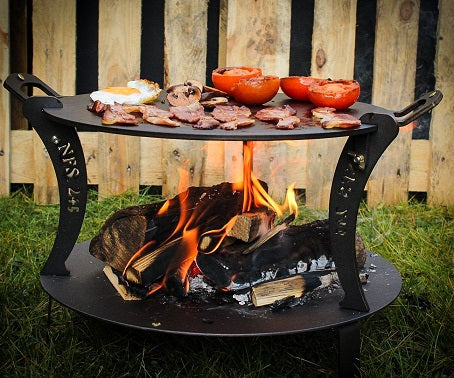

A Beginner's Guide to Open Fire Cooking
September 26, 2025 5 min read
Beginner’s Guide to Open Fire Cooking: Everything You Need to Know
There’s something primal about cooking with fire. Long before gas and electricity, flame was the warrior’s stove, a place where meals became rituals and survival became celebration. Today, open fire cooking offers not just bold flavours, but a return to our ancestors way of resilience and simplicity values that are at the heart of Warrior Garden.
What is Open Fire Cooking?
Open fire cooking is the art of preparing food directly over flame, embers, or hot stones. Using wood or charcoal, it transforms ingredients with smoky depth and seared textures that no modern kitchen can match.
Why Start Cooking Over Fire?
- Flavour: Smoke and flame give food an unmistakable taste.
- Connection: Fire cooking links us back to ancestral tradition.
- Community: Gathering around fire turns meals into shared rituals.
Essential Equipment for Beginners
You don’t need a full outdoor kitchen to get started. A simple firepit and grill grate will do. For more versatility, add a tripod with a hanging grill, or heavy-duty cast and spun iron pans for searing and simmering. Our carefully curated Open Fire Cooking Collection has a great selection of items for you to explore the various open flame styles
Fire Safety Basics
Fire is powerful so please respect it. Always cook over glowing embers rather than wild flames. Choose seasoned hardwoods like oak or beech, never resinous or treated wood. Keep water or sand nearby, wear heat-safe gloves, and never leave a live fire unattended.
Common Beginner Mistakes
- Cooking over flames instead of embers.
- Using the wrong wood — softwoods create excess smoke and resin.
- Skipping preheating, which leads to uneven cooking.
Final Warrior’s Note
Like training the body, mastering fire takes patience and repetition. The first attempt may test your nerves, but each burn builds confidence. Hard mornings make for easy days and a well-cooked meal by fire is a warrior’s reward.
1️⃣ Fire Fundamentals: Understanding Heat & Flame
Open fire cooking is governed by one core principle: flame is not the primary cooking medium, heat is. Visible flames are highly unstable and produce uneven, aggressive temperatures that frequently burn the exterior of food before the interior has time to cook. This is why experienced live-fire cooks rely primarily on embers and coals rather than direct flame.
Embers provide a far more predictable and controllable heat source. When wood burns down into glowing coals, the energy release becomes steadier, allowing food to cook more evenly. Instead of being exposed to sudden bursts of extreme heat, ingredients receive consistent radiant and conductive heat, which is critical for proper cooking control.
Understanding this distinction is often the first major breakthrough for beginners. If food repeatedly burns, chars too quickly, or cooks unevenly, the cause is commonly excessive flame exposure rather than incorrect cooking time.
2️⃣ Choosing the Right Wood for Cooking (UK Guide)
Wood selection has a direct impact on both heat quality and flavour. In the UK, hardwoods are the preferred fuel for cooking, as they burn longer, produce stable embers, and generate cleaner heat. Commonly used cooking woods include oak, ash, and beech, all of which provide reliable combustion characteristics suitable for food preparation.
Softwoods such as pine or spruce are generally avoided for cooking purposes. These woods contain higher concentrations of resins and sap, which produce excessive smoke, unpredictable flare-ups, and undesirable flavours. Heavy smoke from resinous woods can impart bitter or acrid tastes while also making temperature control more difficult.
Well-seasoned (properly dried) wood is equally important. Damp or green wood generates inefficient combustion, leading to excess smoke, poor heat output, and unstable fire behaviour. For cooking applications, dry hardwood with low moisture content is significantly more effective and predictable.
3️⃣ Heat Control: The Skill That Changes Everything
Heat management in open fire cooking is achieved primarily through distance and fuel arrangement, not through adjusting a dial or control panel. Moving food closer to the heat source increases cooking intensity, while increasing distance reduces thermal exposure. This simple mechanic replaces conventional temperature controls used in modern appliances.
Coal management is another key variable. Concentrated embers generate higher heat zones, while dispersed coals produce gentler cooking areas. Skilled fire cooks continuously modify coal placement to create functional cooking gradients, enabling simultaneous searing, roasting, or warming.
Beginners often assume that controlling the fire itself is the objective. In reality, effective open fire cooking involves controlling the relationship between food and heat. Adjusting grill height, repositioning coals, or temporarily moving ingredients frequently produces better results than modifying the fire structure.
4️⃣ Common Beginner Mistakes (And How to Avoid Them)
One of the most frequent beginner errors is cooking too early. Freshly lit fires produce large flames but insufficient embers, creating intense yet unstable heat. Allowing the fire to mature and generate a coal bed significantly improves cooking consistency and reduces burning risk.
Another common mistake is excessive fuel loading. Overfeeding a fire restricts airflow and produces erratic combustion behaviour, often leading to uncontrolled flames and heavy smoke. Smaller, controlled additions of fuel typically yield better heat stability.
Poor heat zoning also affects results. Placing all ingredients directly above the hottest point of the fire leaves no margin for adjustment. Establishing multiple heat areas like high, medium, and low provides flexibility and reduces cooking errors.
5️⃣ Safety Principles for Open Fire Cooking
Open fire cooking introduces hazards not present in standard kitchen environments. Fires should always be positioned on stable, non-flammable surfaces with sufficient clearance from structures, vegetation, and overhead materials. Environmental awareness is essential.
Extinguishing capability must be available at all times. Water, sand, or fire-appropriate suppression methods should be immediately accessible. Leaving fires unattended, even briefly, increases risk significantly due to wind shifts and fuel variability.
Wind conditions require special consideration. Airflow influences flame direction, heat intensity, and spark behaviour. Cooking setups should account for prevailing wind to maintain both safety and heat control.
6️⃣ Frequently Asked Questions
Should food be cooked directly over flames?
Direct flame exposure often causes burning and uneven cooking. Stable embers and coals provide more consistent heat and better cooking control.
Why does my fire produce too much smoke?
Excess smoke is commonly caused by damp wood, poor airflow, or excessive fuel loading. Well-seasoned hardwood and adequate oxygen supply are essential for clean combustion. Smoke behaviour is often a combustion issue rather than a cooking issue.
What wood should be avoided for cooking?
Resinous softwoods such as pine are typically unsuitable due to heavy smoke production, unstable combustion, and undesirable flavour effects.
Why does food burn outside but remain raw inside?
Excessive heat intensity — commonly from flames — can rapidly char the exterior before internal heat transfer completes. Increasing distance or using ember-based heat usually resolves this issue.
Is charcoal better than wood for cooking?
Both fuels have advantages. Charcoal offers predictable heat and lower smoke production, while natural wood provides flavour contribution and traditional fire behaviour. The choice depends on desired cooking control and flavour profile.
DEBUG handle:
Continue your journey in the Warrior’s Kitchen: Discover open-fire recipes, ancestral cooking techniques, and foraged feasts built for resilience. Explore A Warrior’s Feast
Subscribe
Sign up to get the latest from the warrior's way blog, promotions and more