
Have an enquiry? Call us today on 0333 050 2911
Have an enquiry? Call us today on 0333 050 2911

Balance and Breath: Building the Warrior’s Foundation
January 02, 2026 3 min read
Strength begins where chaos ends. Every leap, every hold, every strike — all of it depends on balance and breath. Without them, power becomes reckless. With them, movement becomes art. The warrior’s foundation isn’t the muscle; it’s the control that guides it — the quiet command that keeps motion centred even when the world around it shakes.
Balance and breath are the twin pillars of composure. One anchors the body, the other steadies the mind. Together, they form the rhythm that turns exertion into meditation. To move well is to breathe well, and to breathe well is to move with intention. The man who learns to align these two forces discovers the kind of power that doesn’t fade when the noise stops.
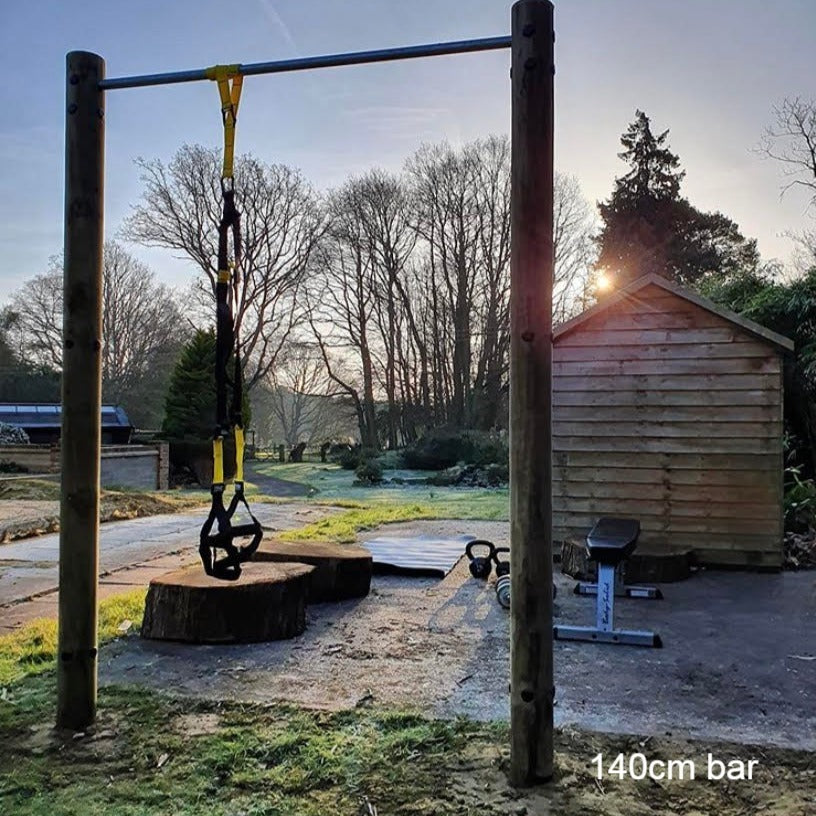
Featured Product is the Contemporary Range Single Pull Up Bar by The Garden Gym. Check out our full collection here!
The Centre Within
Every movement begins from a centre — the core, the breath, the focus between thought and action. It’s the point from which everything extends and to which everything returns. When balance falters, it’s the centre that saves you. When fatigue sets in, it’s the breath that rebuilds your control. Training these two is not optional; it’s fundamental.
Ancient warriors trained not just to fight, but to remain unshaken. They knew that losing balance meant losing everything. So they built it daily — through stance, stillness, and breath. Today, we return to those principles. You don’t need equipment or noise. You need awareness, discipline, and patience. These are the muscles that never atrophy.
The Warrior’s Ritual: Training Balance and Breath
- Start with grounding. Stand barefoot if possible. Feel the weight of your body evenly through both feet. Soften the knees, lengthen the spine, and take five slow breaths — inhaling through the nose, exhaling through the mouth.
- Move like water. Flow between movements instead of snapping into them. Try slow squats, lunges, or single-leg stands. Let balance come from subtle correction, not stiffness.
- Control the breath under tension. During holds or planks, resist the urge to brace. Inhale deeply through the nose, fill the ribs, and exhale slowly. Each breath is an anchor against fatigue.
- Train instability. Use uneven terrain, a log, or a balance beam. The goal isn’t perfection — it’s awareness. When you wobble, adjust through breath before muscle.
- End in stillness. After your session, stand or sit quietly. Let your heartbeat slow and your breath settle. Strength without calm is noise; calm without strength is stillness wasted.
Breath as Weapon, Balance as Shield
The warrior who controls his breath controls his mind. Every exhale releases tension; every inhale gathers focus. Breathing patterns influence the nervous system — shallow breathing breeds panic, deep breathing restores clarity. In combat or life, this means one thing: the calmest man wins.
Balance, meanwhile, protects that calm. It’s the invisible armour that allows motion without fear. You don’t need to move fast to be powerful; you need to move deliberately. Each repetition done with full control builds more discipline than a hundred done in chaos.
Warrior’s Reflection
The path of strength is not linear — it’s circular. You rise, you fall, you return. Each time, balance and breath bring you back to centre. They remind you that progress isn’t about how far you go, but how steady you remain when everything shifts. When your balance is unbroken and your breath unshaken, there’s nothing left to resist — only rhythm, flow, and purpose. That’s the foundation every warrior must build before the fight begins.
FAQ
How does breath control improve training?
Controlled breathing stabilises your core, improves endurance, and prevents overexertion. It connects movement to rhythm, reducing stress and increasing focus.
What are the best exercises for balance?
Single-leg squats, planks, and slow lunges develop stability. Practising on uneven surfaces or outdoors enhances real-world control and coordination.
How can I train breath daily?
Begin and end your day with three minutes of slow nasal breathing. Inhale for four seconds, exhale for six. Over time, you’ll build awareness that carries into every movement.
DEBUG handle:
Continue your journey in the Warrior’s Kitchen: Discover open-fire recipes, ancestral cooking techniques, and foraged feasts built for resilience. Explore A Warrior’s Feast
Subscribe
Sign up to get the latest from the warrior's way blog, promotions and more