
Have an enquiry? Call us today on 0333 050 2911
Have an enquiry? Call us today on 0333 050 2911

Fire and Air: The Art of Heat Control
December 26, 2025 3 min read
Every flame is alive. It breathes, grows, and fades according to how you feed it. A warrior who learns to cook with fire must first learn to master air. Fire and air are partners — one creates, the other sustains. Too much air, and the flame rages wild and burns through its strength. Too little, and the embers suffocate in silence. True control lies in balance.
Most cooks see fire as a blunt tool — hot or cold, on or off. But in truth, it’s a living spectrum. Beneath the surface of every blaze lie hidden gradients: the flickering tips that char, the radiant core that sears, and the slow-glowing heart that nourishes. The firekeeper’s task is not to dominate these forces but to orchestrate them — shaping airflow, spacing wood, and reading the invisible movement of heat as it curls through smoke.
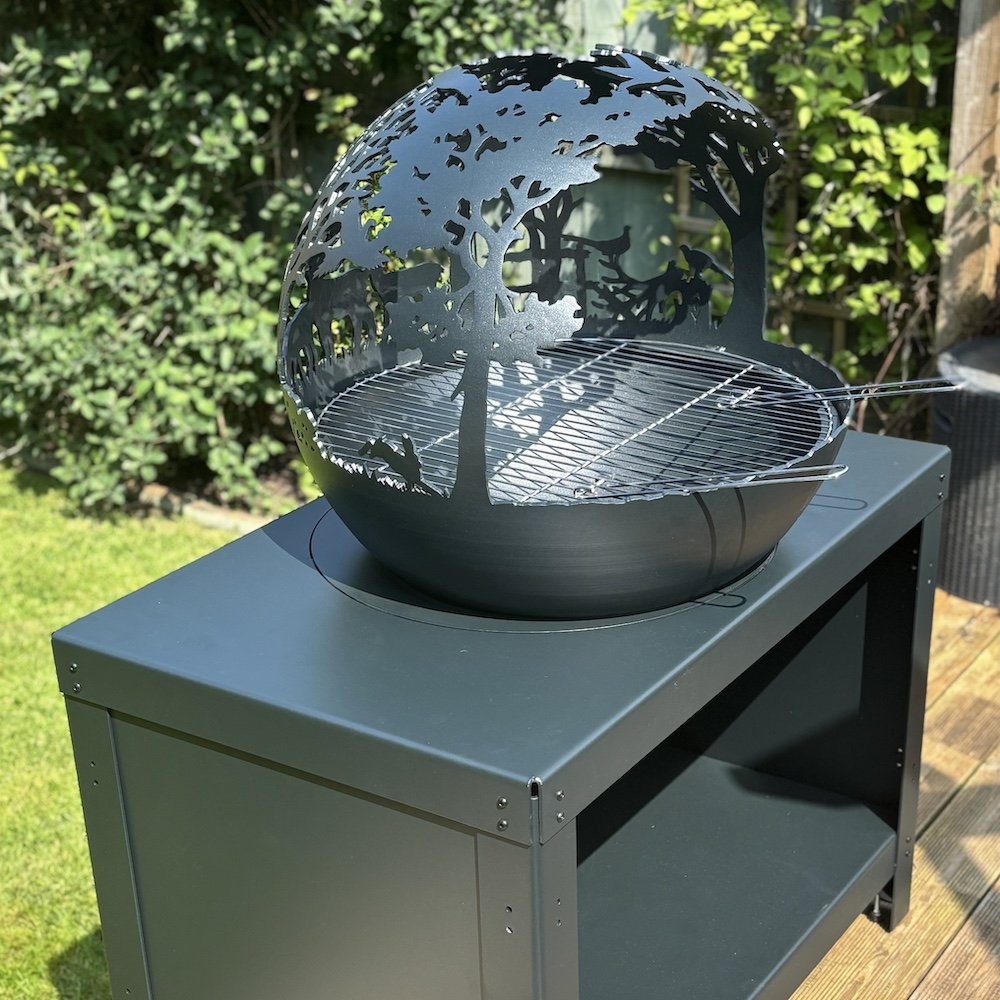
Pictured product is The Cooking Station with BBQ Sphere by our esteemed partner, The Firepit Co. Check out our full collection here!
The Breath of the Fire
Air is the element most misunderstood. It moves unseen, yet every whisper of oxygen shifts the fire’s mood. The trick isn’t to chase heat — it’s to guide it. Open vents draw flame higher but burn faster. Sheltering coals creates depth and stability. A single rock placed on the leeward side of a firepit can redirect flow and even out temperature. When you begin to feel these changes instead of forcing them, you start to speak the true language of flame.
Watch your smoke. Thin and blue means your balance is right — clean, efficient, calm. Thick and grey means your flame is starved or your wood too damp. Adjust your logs, lift your grate, or stir the embers to feed the heart again. Fire is never still; it’s a conversation. The more you listen, the more it teaches.
The Warrior’s Ritual: Mastering Heat by Instinct
- Build your zones. Create layers of intensity — a searing centre, a medium edge, and a resting zone. Use these like a forge: cook, temper, and rest without leaving the flame.
- Feed small, often. Add fuel in moderation. Sudden piles of wood choke oxygen and create dirty smoke. Patience builds consistency.
- Feel the heat. Hold your palm above the coals. Three seconds is high heat, five is medium, eight is slow. Your skin is a more honest thermometer than any tool.
- Control the wind, not the fire. Use the natural direction of air to your advantage. Angle vents, rocks, or screens to funnel breath through the coals. The fire follows airflow, not command.
- Close with gratitude. When the cook is done, rake the embers gently and leave a small heart glowing. It’s a sign of respect — the fire has served its purpose and earned its rest.
Firekeepers of the Modern Age
Today, we cook with gas, electricity, and precision tools — but the principle remains. Whether you’re tending a grill in a city garden or a firepit by the coast, the lesson is the same: fire doesn’t need control; it needs understanding. Learn how air moves through your setup. Feel how opening a vent lifts the sound of the burn, or how a simple turn of a pan can shift heat across its surface. The warrior’s art lies not in domination, but harmony.
Warrior’s Reflection
Fire and air teach humility. You can’t command the elements — you can only align with them. Every adjustment you make, every flicker you watch, builds awareness that carries beyond the pit. Control is not about force; it’s about rhythm. The man who learns to breathe with the fire learns to act with purpose in all things. He knows when to let things burn, when to let them breathe, and when to let them rest.
FAQ
How can I tell when my fire is too hot?
If flames lick above your grill grate or food chars instantly, airflow is excessive. Rake the coals back and reduce oxygen. Aim for glowing embers and gentle, steady heat.
Is it better to cook over flame or embers?
Flame gives intensity; embers give control. Sear over flame, then finish over the ember bed for flavour and precision.
What’s the ideal wood for consistent heat?
Oak and ash burn long and even. Mix small pieces of beech or birch to adjust temperature quickly without destabilising the fire.
DEBUG handle:
Continue your journey in the Warrior’s Kitchen: Discover open-fire recipes, ancestral cooking techniques, and foraged feasts built for resilience. Explore A Warrior’s Feast
Subscribe
Sign up to get the latest from the warrior's way blog, promotions and more