
Have an enquiry? Call us today on 0333 050 2911
Have an enquiry? Call us today on 0333 050 2911
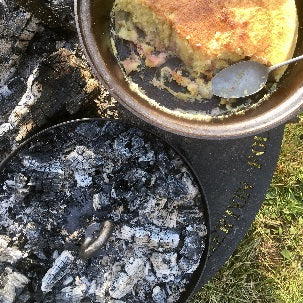

Cast Iron Steak & Crispy Garlic Potatoes Over Fire
February 20, 2026 2 min read
Few meals demonstrate the advantage of live-fire cooking and cast iron better than a properly seared steak. High heat, direct energy transfer, and thermal stability combine to produce results that are extremely difficult to replicate with lightweight cookware.
This recipe is intentionally simple. Its purpose is not culinary complexity, but heat mastery and flavour development — the foundations of confident outdoor cooking.
Why Cast Iron Excels Over Fire
Cooking directly over flame demands cookware that can absorb, retain, and redistribute intense heat. Cast iron performs exceptionally well in this environment due to its density and thermal mass.
Unlike thin metal pans, cast iron resists rapid temperature fluctuation. This stability is critical when working with unpredictable fire behaviour. If you're new to this style of cooking, exploring proper equipment is essential — browse cast iron cookware designed specifically for high-temperature applications.
Ingredients
- 2 steaks (ribeye, sirloin, or preferred cut)
- 500g baby potatoes
- 3–4 cloves garlic (crushed)
- Olive oil
- Salt
- Black pepper
- Fresh herbs (optional)
Equipment
- Cast iron skillet or pan
- Tongs
- Fire-safe cooking setup
For those building a dedicated outdoor cooking space, selecting stable heat sources and fire-appropriate tools makes an enormous difference — explore open fire cooking equipment suited to live-fire environments.
Method
1. Prepare the Fire
Establish a consistent bed of embers rather than aggressive flames. Embers provide stable radiant energy, which is far easier to cook over than active fire.
2. Cook the Potatoes First
Toss potatoes lightly in olive oil and salt. Place them into a preheated cast iron pan over moderate heat. Cook slowly, turning occasionally, until golden and crisp. Add crushed garlic near the end to prevent burning.
3. Heat the Pan for the Steak
Increase heat intensity and allow the pan to fully saturate with heat. Proper searing depends on stored thermal energy, not just visible flame.
4. Sear the Steak
Season steaks generously with salt and pepper. Place into the hot pan and avoid moving them prematurely. A stable crust forms only when contact heat remains uninterrupted.
5. Rest Before Serving
Remove steaks and allow them to rest briefly. This preserves internal moisture and improves texture.
Key Cooking Principles
- Cook with heat stability, not flame intensity
- Allow cast iron to store energy before searing
- Manage zones rather than chasing fire behaviour
Frequently Asked Questions
Why use cast iron instead of stainless steel?
Cast iron retains and redistributes heat far more effectively, reducing temperature drops when food is introduced — critical for searing.
Do I need extremely high flames?
No. Stable embers provide more predictable cooking conditions than active flames.
Can this be cooked on other heat sources?
Yes, but live-fire cooking introduces flavour and heat dynamics difficult to reproduce indoors.
DEBUG handle:
Continue your journey in the Warrior’s Kitchen: Discover open-fire recipes, ancestral cooking techniques, and foraged feasts built for resilience. Explore A Warrior’s Feast
Subscribe
Sign up to get the latest from the warrior's way blog, promotions and more