
Have an enquiry? Call us today on 0333 050 2911
Have an enquiry? Call us today on 0333 050 2911
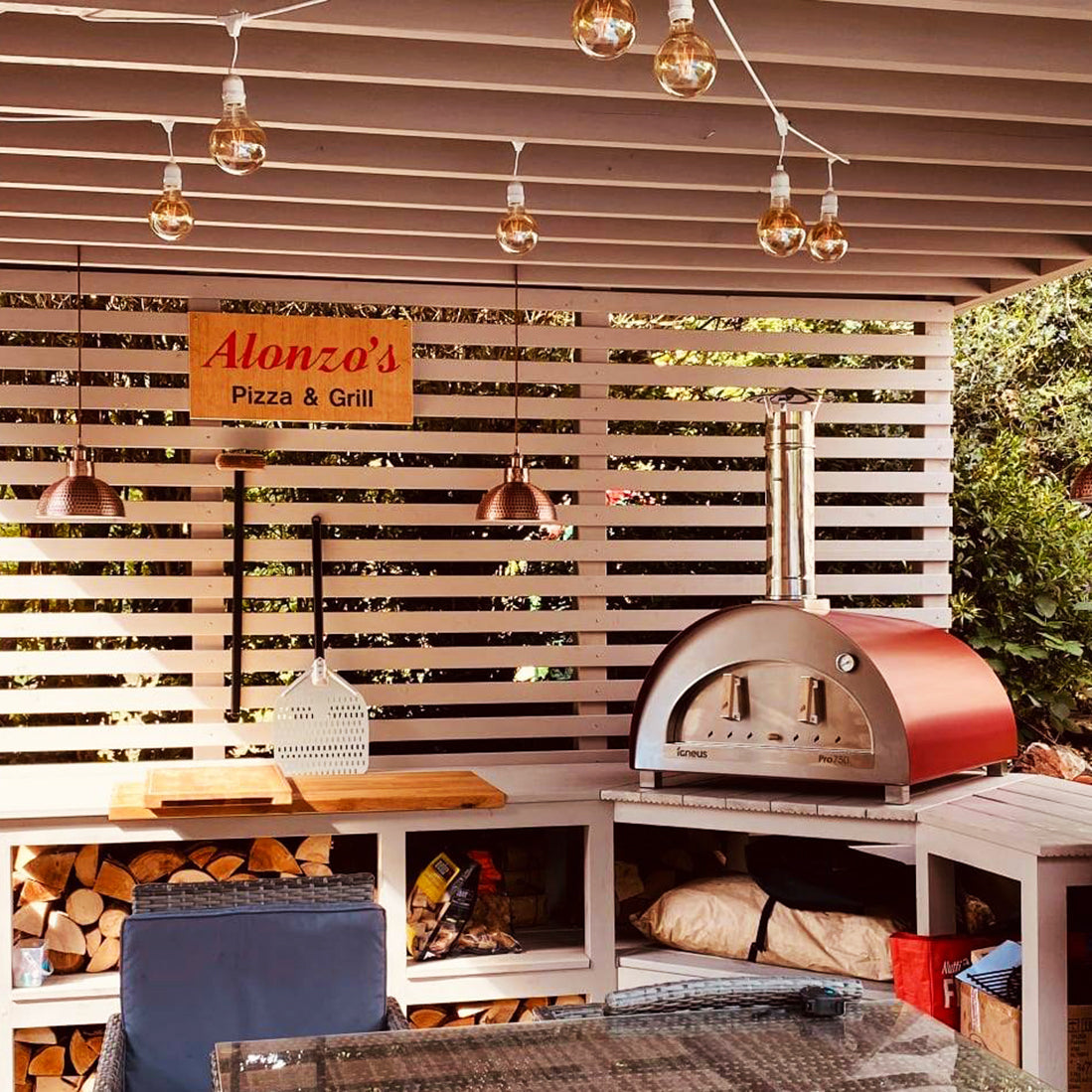

Wood Fired Oven vs BBQ?!
February 13, 2026 4 min read
Most people buy a BBQ because it feels like the default. It’s familiar. Fast. Social. You can cook a lot of food, quickly, with minimal learning. But if you’re reading this, you’re probably sensing something: a BBQ is a tool for grilling, while a wood-fired oven is a tool for cooking. They can overlap, but they don’t change your behaviour in the same way.
This guide isn’t about brand loyalty or winning an argument. It’s about outcomes. What changes in your food, your skill, and your weekly habits when you move from a BBQ to a proper outdoor wood-fired oven.
The core difference: direct heat vs a controlled cooking environment
A BBQ is dominated by direct radiant heat. You manage results by controlling flame intensity, distance, and timing. That can produce excellent food, but it tends to keep you in “flip and manage” mode. Your attention is on the surface of the food and the volatility of the heat.
A wood-fired oven is a heat chamber. Once it’s up to temperature, you’re cooking with a combination of radiant heat, hot airflow, and stored heat in the oven’s internal surfaces. In practice, that means more even cooking, more repeatability, and a much higher ceiling for what you can produce beyond “BBQ staples”.
What actually changes in the food
If you only measure “good” by char marks and smoke, a BBQ looks unbeatable. But most people don’t want only char. They want control: the ability to brown the outside without sacrificing tenderness, to roast without drying out, and to produce consistent results across multiple dishes.
This is where an oven changes the game. A chamber environment makes it easier to run two modes that are difficult to stabilise on a BBQ:
- High-heat cooking with rapid browning (the obvious pizza use-case, but also flatbreads, seared vegetables, and fast proteins).
- Retained-heat cooking where the oven’s stored heat carries the cook (roasts, tray bakes, vegetables, and cast-iron dishes).
Heat behaviour: the skill that separates “grilling” from “cooking”
On a BBQ, heat management is mostly external: you move food, adjust vents, add fuel, and react to flare-ups. On a wood-fired oven, heat management is mostly structural: you build heat, then you cook with zones—closer to the flame for intensity, further away for gentler cooking.
That’s why experienced oven owners stop thinking “pizza oven” and start thinking “outdoor oven”. Once you understand zone cooking inside the chamber, you can bake, roast, and finish food with an accuracy that surprises most BBQ-only cooks.
Where a BBQ wins (and why you might keep both)
A BBQ wins on speed-to-first-bite and simplicity. If you want to throw on burgers, sausages, or quick skewers with minimal setup, a BBQ is hard to beat. It also wins when you want very direct smoke exposure and that classic open-grill workflow.
If your outdoor cooking is mostly “quick grilling”, a high-quality BBQ might be enough. But if you want outdoor cooking to become a craft—something you get better at—the oven usually delivers more long-term value.
Where a wood-fired oven wins (the real buyer decision)
A wood-fired oven wins when you want your outdoor setup to do more than grill. The buyer shift is simple:
- You want a broader menu than BBQ classics.
- You want repeatability (less guesswork, fewer flare-up failures).
- You want a skill ladder (pizza → bread → roasts → full tray meals).
- You host and want a centrepiece that makes outdoor cooking feel like an event.
That’s why many people start with pizza and end up using the oven for weeknight-style meals, tray bakes, and seasonal vegetables—because the chamber environment supports more cooking styles than people assume at the beginning.
“Which size do I actually need?” (using Igneus as real-world examples)
To keep this practical, here are two ends of a common ownership pathway using the Igneus range as examples.
- Entry / family-friendly size: an oven like the Igneus Bambino is built for compact spaces while still supporting more than pizza—large enough for a standard roasting tray, with a cooking area sized around a single large pizza.
- Entertaining / serious output: an oven like the Igneus Pro 750 is designed for high throughput—useful if you regularly host, want multiple dishes moving, or want to cook at a pace that keeps up with groups.
The practical decision isn’t “what’s the best oven?” It’s “what size matches my habits?” If you host often, or you want to cook multiple items at once, larger cooking area becomes more valuable than people expect.
Decision checklist: choose the tool that changes your outcomes
- Choose a BBQ if you mainly want fast grilling, minimal setup, and familiar results.
- Choose a wood-fired oven if you want a broader menu, repeatability, and a skill ladder that keeps paying you back.
- Keep both if you want “quick grill nights” and “proper cooking sessions” without compromise.
If you’re leaning oven, your next move is to cook something that proves the point beyond pizza. Start with a simple tray-style meal that showcases controlled heat and retained heat. We’ve included one below as a practical next step.
Frequently Asked Questions
Is a wood-fired oven only for pizza?
No. Pizza is just the entry point because it’s fast and satisfying. A true outdoor wood-fired oven can also roast, bake, and run tray meals in cast iron or roasting trays once you understand heat zones and cooking distance from the flame.
Does a wood-fired oven take too long to heat up compared to a BBQ?
It depends on the oven and the cooking goal. A BBQ can be quicker for basic grilling. A wood-fired oven takes longer to establish a cooking environment, but then offers more stable heat and broader cooking styles.
Do I need special wood?
You want clean, well-seasoned hardwood. Damp wood creates excess smoke and unstable heat. Many users prefer kiln-dried hardwood for predictable ignition and temperature building.
Will I actually use it regularly?
You will if you treat it as an outdoor oven, not a novelty pizza gadget. The more you use it for simple tray meals, vegetables, and weeknight-style cooking, the faster it becomes a habit rather than an occasional event.
What should I cook first (besides pizza) to prove the value?
A tray-style meal: chicken fillets + seasonal vegetables. It’s simple, it proves controlled heat, and it shows why an oven changes more than just your pizza nights.
DEBUG handle:
Continue your journey in the Warrior’s Kitchen: Discover open-fire recipes, ancestral cooking techniques, and foraged feasts built for resilience. Explore A Warrior’s Feast
Subscribe
Sign up to get the latest from the warrior's way blog, promotions and more